
Starting a business is expensive enough.
You may already be paying for equipment, insurance, stock, software, premises or professional fees. Marketing can quickly feel like another cost you are expected to find money for.
The good news is that attracting customers does not always require a large advertising budget.
Small business marketing on a budget is often less about how much you spend and more about where you focus your time, attention and money. A clear message and a consistent approach can take you much further than paying for several disconnected marketing activities.
So, where should you start?
Start With One Customer and One Goal
Before creating several social media accounts, printing hundreds of flyers or paying for adverts, decide who you want to attract.
Be specific.
Are you trying to reach local parents, small business owners, homeowners, tradespeople or people planning a wedding? What problem are they trying to solve, and why might they choose you?
You also need a clear goal.
You might want to:
- secure your first five customers;
- generate more enquiries;
- bring people into your shop;
- increase local awareness;
- encourage repeat business.
Companies House guidance on growing a small business recommends thinking about your target audience, what they need and how your business can meet those needs.
A simple sentence can help:
We help [type of customer] with [problem] by providing [product or service].
That one sentence can guide your website, social posts, networking conversations and advertising.
Make Your Business Easy to Find Online
People cannot buy from a business they cannot find.
For local businesses, one of the best cheap ways to market a business is to create and complete a Google Business Profile.
Google says eligible businesses can manage how they appear on Google Search and Maps at no charge. You can add your opening hours, telephone number, website, service area, photographs and customer reviews.
Take the time to complete every relevant section.
Use clear photographs. Check your contact details. Explain what you offer in plain English. Ask satisfied customers to leave honest reviews. See EMS’ Google Business Profile below.

Small improvements matter here.
Someone searching for your service may compare several businesses in just a few minutes. A complete profile can make yours feel more trustworthy and easier to contact.
Choose One or Two Marketing Channels
New business owners often feel pressure to be everywhere.
You do not need to be.
Trying to post on Facebook, Instagram, TikTok, LinkedIn, YouTube and several other platforms can quickly become exhausting. It also makes it harder to create good content consistently.
Choose one or two channels where your customers are most likely to spend time.
A business selling to other companies may begin with LinkedIn, email and local networking. A visual consumer brand may focus on Instagram or TikTok. A local service business may get better results from Google, Facebook community groups and customer referrals.
Focus beats noise.
Some of the best marketing ideas for small businesses come from the questions customers ask every week. Turn those questions into content.
You could:
- answer a common customer question;
- explain how your service works;
- show the process behind your product;
- share a customer story;
- introduce the person behind the business;
- explain a common mistake people make.
One useful idea can become several pieces of content. A blog article could be turned into short social posts, an email, a video and a checklist.
That saves time. It also helps you repeat your message without sounding repetitive.

Put Yourself in Front of Potential Customers
Marketing does not always begin online.
Sometimes, the best thing you can do is make a list of the businesses you would like to work with, visit them in person and introduce yourself.
Keep it simple. Explain who you are, what your business does and why you thought it might be relevant to them. Have a quick chat, leave a business card and move on.
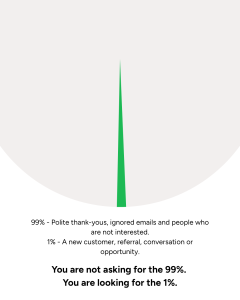
Most people will thank you politely.
Many will never contact you.
That is normal.
You are not doing this for the 99% who are not interested. You are looking for the small number of people who may need what you offer now, remember you later or recommend you to someone else.
For business-to-consumer companies, events can offer a similar opportunity. Make a list of local markets, fairs, exhibitions and community events where your ideal customers are likely to attend.
Then contact the organisers.
Ask whether you can exhibit for free, take a smaller space or pay after the event. Be honest and explain that you are just starting out and want to test whether the event is right for your business.
You will probably hear no more often than yes.
Ask anyway.
As the classic Northern phrase goes, “shy bairns get nowt.”
When your budget is small, confidence, persistence and a willingness to start conversations can sometimes take you further than paid advertising.
Start an Email List Early
Social media platforms can change their rules, reduce your reach or disappear from people’s feeds.
An email list gives you a more direct route to people who have asked to hear from you.
Start collecting email addresses early, but give people a clear reason to subscribe. You might offer useful advice, a checklist, early access to offers, event updates or helpful local information.
Then send emails that are worth opening.
They do not need to be long. They do need to be useful.
UK electronic marketing rules still apply. The Information Commissioner’s Office states that marketing emails and texts to individuals generally require specific consent, with a limited exception for some existing customers.
Every marketing email should also include a clear way to unsubscribe.
Start Small and Stay Consistent
Marketing on a limited budget does not mean doing everything for free.
It means making careful choices.
Start by understanding your customer. Make your business easy to find. Choose a small number of channels. Share useful content. Speak to potential customers. Measure what leads to enquiries and sales.
You do not need to do everything this week.
Pick one action and begin there.
For more support with social media, content creation, SEO, email marketing and online promotion, explore Enterprise Made Simple’s digital marketing training.